


What Is Asset Value Date?
Asset Value Date is the date that determines the Capitalization Date in the Asset Master Data within the Fixed Assets module of SAP Business One. This date is used by the system to determine when an asset is recognized as a fixed asset and when depreciation should begin. In other words, the Asset Value Date serves as the starting point for depreciation, rather than being just an administrative date on the purchasing document.
When the Depreciation Run is executed, SAP Business One calculates depreciation based on the Asset Value Date that has become the Capitalization Date in the Asset Master Data. Therefore, entering the correct Asset Value Date directly affects depreciation values, Net Book Value, and fixed asset reports.
Using Asset Value Date in Fixed Asset Purchases
When a fixed asset is purchased through an A/P Invoice, SAP B1 processes it as follows:
- The user creates an A/P Invoice containing a Fixed Asset item.
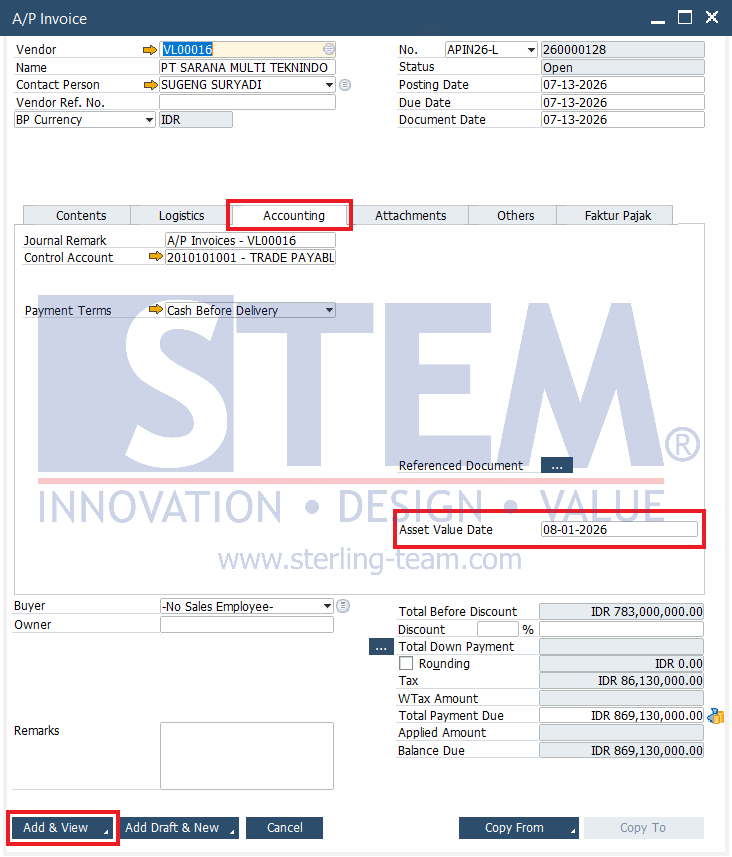
- Before the document is added, the user can specify the Asset Value Date on the Accounting tab.
- In the Asset Value Date field, enter the appropriate date. By default, SAP B1 populates this field with the Posting Date. However, the date can be changed manually if the asset is recognized or starts being used on a different date.
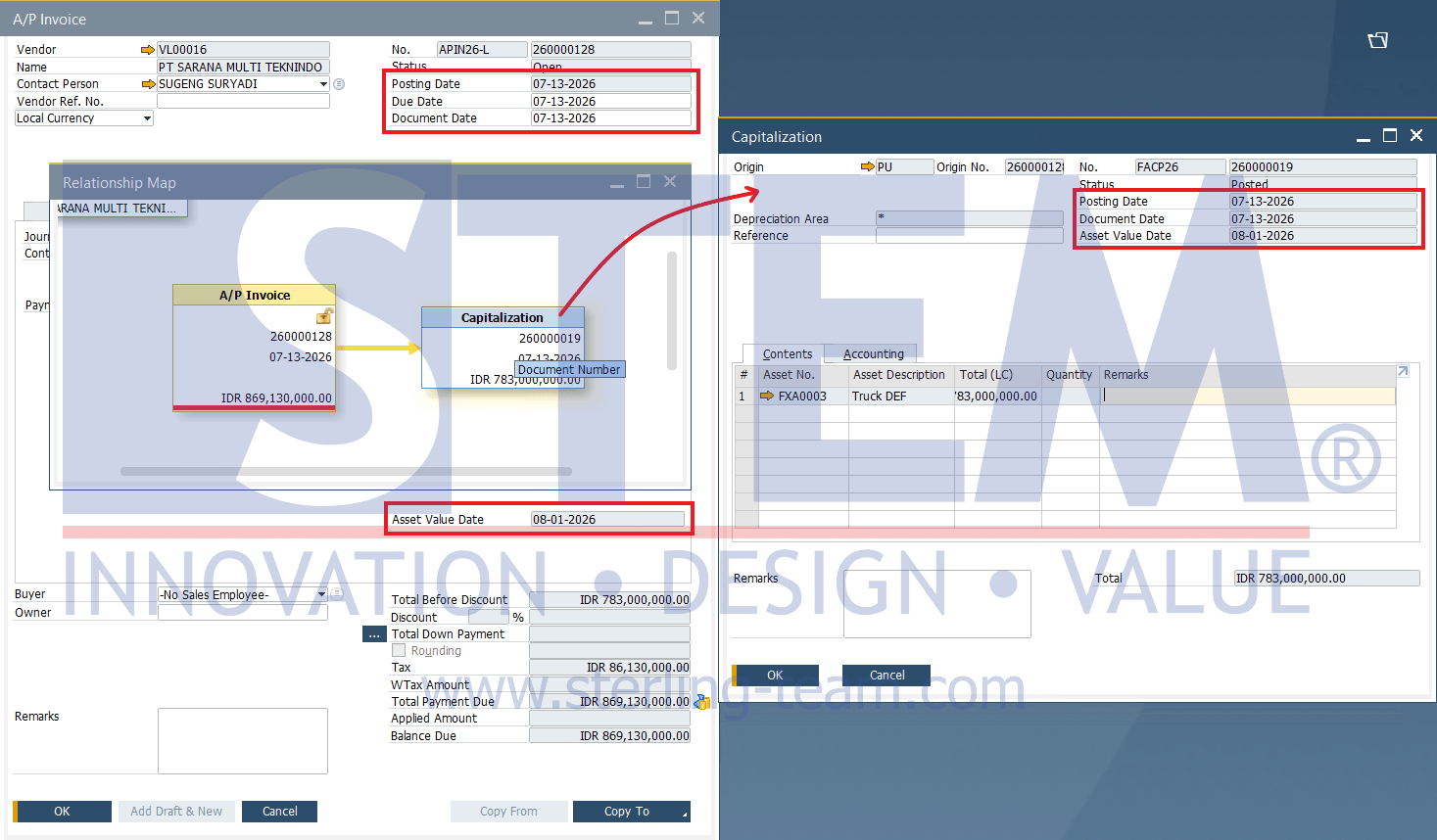
- When the A/P Invoice is added, SAP Business One automatically creates a Capitalization document. The Asset Value Date entered in the A/P Invoice is copied to the Asset Value Date in the Capitalization document.
- The Asset Value Date in the Capitalization document becomes the Capitalization Date in the Asset Master Data.
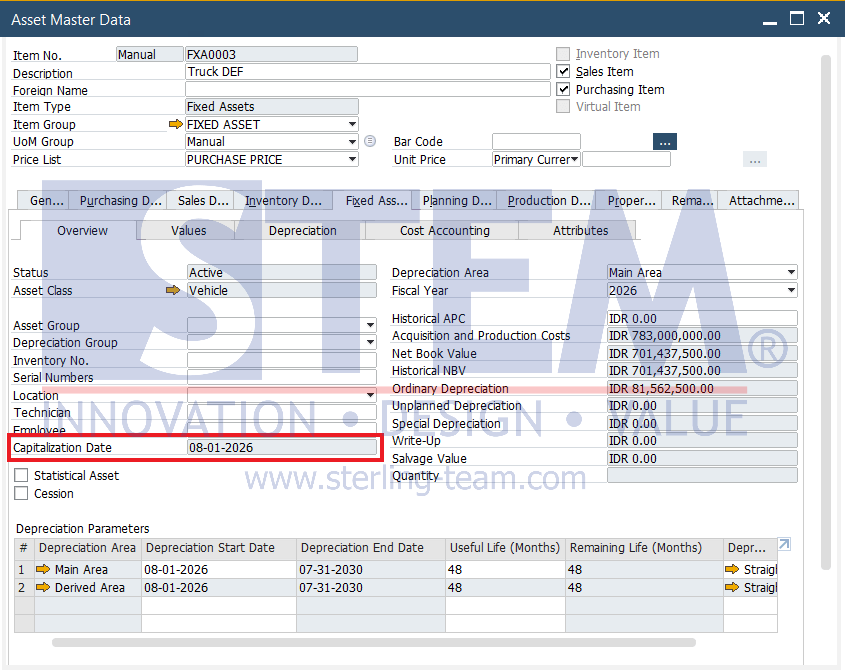
- The Asset Master Data becomes active, the asset’s Net Book Value starts from this point, and the Capitalization Date is used as the basis for depreciation calculations.
Important Points About Asset Value Date
The following are some important points to understand about Asset Value Date:
- The Asset Value Date can be changed before the A/P Invoice is added. Once the document has been added, the date can no longer be modified.
- The Asset Value Date may be different from the Posting Date.
- The Asset Value Date serves as the basis for depreciation calculations. SAP Business One uses this date to determine when an asset starts to depreciate, rather than using the Document Date or Posting Date.
- After the asset is capitalized, the Asset Value Date becomes the Capitalization Date in the Asset Master Data.
Practical Example
Suppose a company purchases a new truck under the following conditions:
- The supplier’s invoice is posted on July 15
- The truck is fully prepared and begins operation on August 1
If the Asset Value Date remains the same as the Posting Date in July, SAP B1 considers the asset to be active starting in July. As a result, depreciation begins one month earlier, even though the truck has not yet been put into service.
To prevent this, the Asset Value Date should be changed to August 1, which is the date the truck actually starts being used.
With this setup:
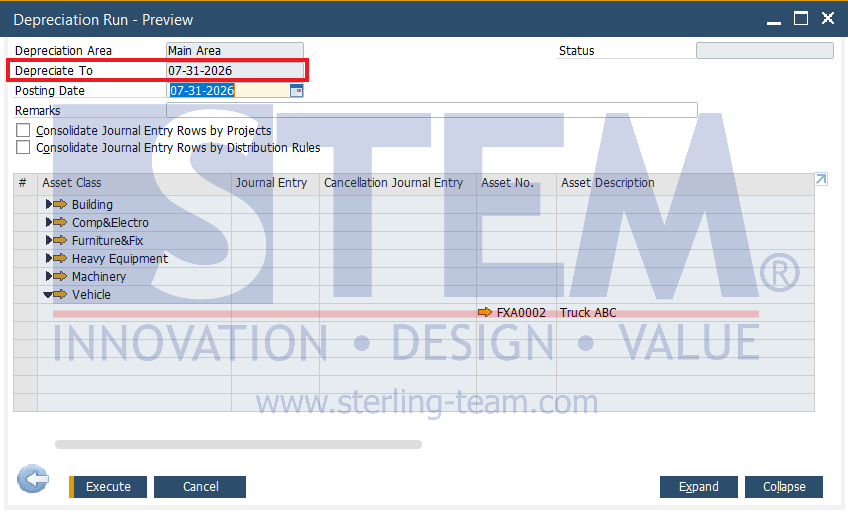
- When the Depreciation Run is executed in July, the truck does not appear in the list of assets to be depreciated because its Capitalization Date falls in August.
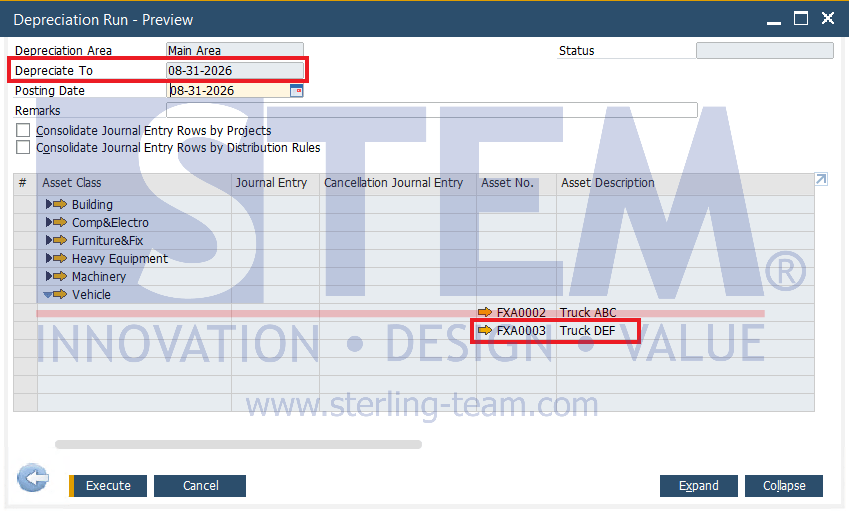
- When the Depreciation Run is executed in August, the truck appears in the depreciation list, and SAP Business One begins calculating depreciation from that date.
This example shows that the Posting Date, Document Date, and Asset Value Date can all be different. Each serves a different purpose, but the Asset Value Date is the date used as the basis for depreciation calculations.
Conclusion
The Asset Value Date is an important field in the fixed asset purchasing process in SAP Business One because it determines the Capitalization Date in the Asset Master Data and serves as the starting point for depreciation calculations.
Entering an incorrect Asset Value Date may cause depreciation to begin earlier or later than intended, affecting the asset values reported in financial reports, including the Net Book Value and Asset History Sheet.
Therefore, before adding an A/P Invoice for a fixed asset, always ensure that the Asset Value Date reflects the date when the asset is recognized or first placed into service. This ensures that depreciation is calculated accurately and in accordance with the company’s operational and accounting practices.